Step 1The Basics
Everything you need to start.
We are 152 tiles, and we arrive sorted the same way every time. There are 108 number tiles — three suits (Craks, Bams, and Dots), nine numbers in each, four copies of every one. Then come 16 winds — four each of East, South, West, and North — 12 dragons (four Red, four Green, four White), 8 flowers, and 8 Jokers. That is the whole family, and every one of us has a job.
At the start of a hand, the dealer — the East seat — takes 14 of us, and everyone else takes 13. The rest stay face-down in the wall, which leaves 99 tiles to draw from. From there the rhythm never changes: on your turn, pick one tile from the wall, then discard one. You are always holding 13 tiles, or 14 if you are East.
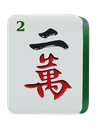
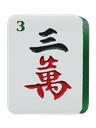
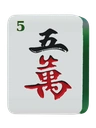
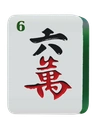
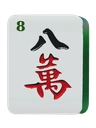
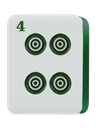
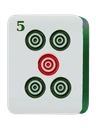
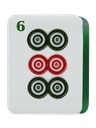
Craks, Bams & Dots — 108 number tiles
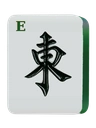
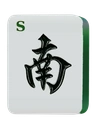
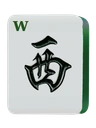
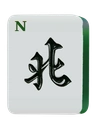
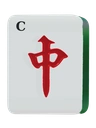
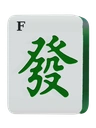
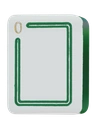
16 winds & 12 dragons
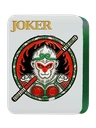
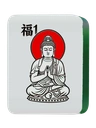
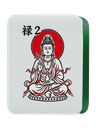
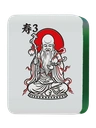
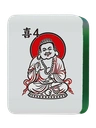
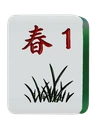
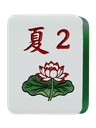
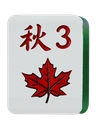
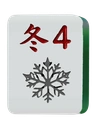
8 Jokers & 8 flowers
Here is the biggest surprise for anyone who has played another version of mahjong: under National Mah Jongg League rules, there are no runs. You will never find a hand that asks for 4-5-6 of a suit. If three tiles show consecutive numbers, they are simply three singles that happen to sit next to each other — the League says a line like 1-1-2-3-4-5-6 is a grouping of singles and a pair, not a run.
So how do we group? A pair is two of the same tile, a pung is three, a kong is four, a quint is five, and a sextet is six — the last two only exist because Jokers can fill in. Then come the special shapes: NEWS is one of each wind, and a year group is the digits of the current year, so 2026 means 2, 0, 2, 6, with the White Dragon playing as the 0. Everything else on your rack is a single.
A pair — two of a kind
A pung — three of a kind
A kong — four of a kind
A quint — five of a kind, Joker included
NEWS — one of each wind
The year group — 2, 0, 2, 6
Not a run — three singles
A winning hand is 14 tiles that match one line on the current year's card exactly. Almost every line is built the same way: four groups plus one pair. The groups can be pungs, kongs, quints, or the special shapes — NEWS, a year group, or singles — and the card tells you which ones your line needs.
When your tiles finally match, call "Mah Jongg!" out loud, lay your hand down, and point to the line you matched. The table checks it against the card together. If it matches, you win; if it does not, your hand is dead for the rest of the round — you stop picking and discarding, but you still pay the winner the same as every other player. So read the line one more time before you call.
Our teaching example — four groups and a pair, 14 tiles
Step 2Reading the 2026 Mah Jongg Card
Make sense of the yearly card.
Every spring the National Mah Jongg League publishes a new card, and that card is the rulebook for the year — a hand that won in March may not win in April. The card is a grid of nine sections: the year itself, 2468, Any Like Numbers, Quints, Consecutive Run, 13579, Winds-Dragons, 369, and Singles and Pairs, with fifty-five hand lines in total, split into two big columns marked X and C.
Each line is a recipe: the tiles it wants, whether Jokers are allowed, and how many points it is worth. The sketch below shows the card's shape in our own simple way — it is not the League's card, and not its layout or colors. The real card is worth holding in your hands; its exact wording and pictures belong to the League.
Our own sketch of the card's shape — not the League's card, and not its layout or colors.
A line is written in a shorthand that looks cryptic for about a week and then becomes second nature. Numbers are the tile's face value, and suits get a letter: C for Craks, B for Bams, D for Dots. The honor tiles use their own letters — N, E, S, and W for the winds (W is West), R and G for the Red and Green Dragons, and 0 (or WD) for the White Dragon, the blank one. A 0 means the White Dragon playing as zero, and F means a flower — any flower, since all eight are interchangeable.
Read a line left to right, group by group: three of the same tile is a pung, a doubled tile is a pair, and a Joker drawn on the line means that hand allows Jokers. If the Joker is crossed out, the hand bans Jokers completely — every tile in it must be real.
Three 2 Craks — a pung
A Joker standing in for the third 5 Crak
A pair of Red Dragons
| Letter | On the line it means |
|---|---|
| C | Craks — the character suit |
| B | Bams — the bamboo suit |
| D | Dots — the circle suit |
| N E S W | North, East, South, West winds |
| R G | Red and Green Dragons |
| 0 or WD | White Dragon — the blank tile |
| 0 | the White Dragon playing as zero |
| F | a flower — any of the eight |
The card's two columns are marked X and C, and they are not the same thing at all. X stands for exposed: a hand in the X column may be played with tiles showing, so you can call discards and lay your groups face-up on the rack. C stands for concealed: a hand in the C column must be built in secret, from tiles you pick yourself.
On a C hand you may not call any discard during play — the single exception is the very tile that wins you the game. If a line asks for a concealed group, those tiles stay hidden in your rack until you call Mah Jongg and lay everything down at once.
Payment customs vary from table to table, so agree on your house rules before the first hand — what follows is the common convention, not a fixed league table. Every line carries a point value printed right on the card, usually somewhere between 25 and 75, and that value is what changes hands when you win. On a win from the wall, every other player pays you double the line's value. On a win from a discard, the player who threw the winning tile pays double, and the other two pay the single value. Also, win without any Jokers in your hand? Double the value. (Exception: Singles and Pairs).
Flowers and Jokers do not add points on their own — the line's value is the whole score. Keep a simple tally, because the numbers add up faster than they feel. Payment customs vary from table to table, so agree on your house rules before the first hand, and let the current card and rules settle any debate.
Step 3The Tiles That Break the Rules
The tiles that bend the rules.
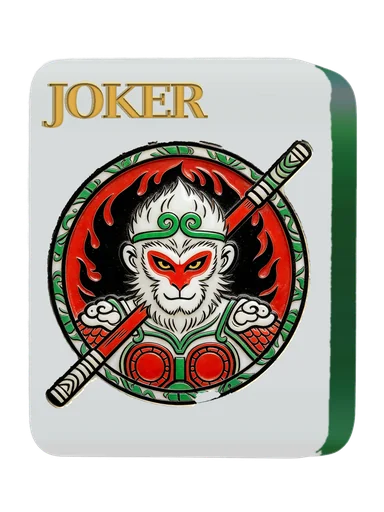
We are eight Jokers, and we are the most flexible tiles in the set. A Joker can stand in for any tile a group needs — three 6 Craks can be 6, 6, Joker, and a quint of 5 Bams can be three real tiles and two of us. When a hand finally comes together, the Jokers in it are usually the reason it got there first.
But we have firm limits. A Joker can never be a single tile, never part of a pair, never part of NEWS, and never part of a year group. We are never passed during the Charleston. And once a Joker is discarded, it is a dead tile — nobody may pick it up, not even to win. When you discard a Joker, name it clearly: call it "Joker," "same," or the name of the tile just discarded. However, the Joker Exchange is allowed: if an opponent exposes a Joker, you can swap it with the real tile on your turn! Hold us until the moment you need us.
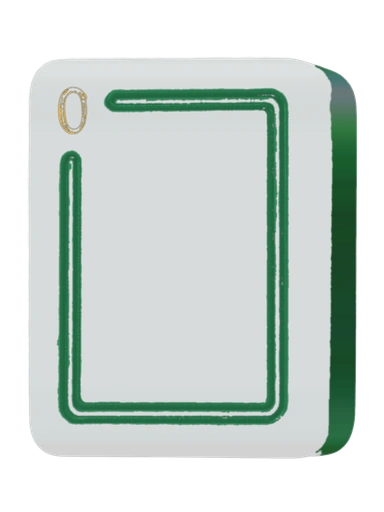
We are the White Dragon — the blank tile, and the only tile in the set that can play as zero. When a line calls for a 0, we step in and become the zero — suit-less, and we never stand in for numbers 1 through 9. The 2026 line is really asking for 2, 0, 2, 6, with the White Dragon as that zero. As a zero we have no suit of our own, so we can join Craks, Bams, or Dots. Don't treat it like a wild card. It only acts as a zero when the card specifically asks for a 0. Otherwise, it's just a regular Dragon.
The catch is the phrase "when called." We are only a zero if the line asks for one — otherwise we are simply a White Dragon, an honor tile useful in pairs and pungs of dragons. On lines that ban Jokers, no substitute may stand in for us; the zero must be the real tile.
All eight — any one matches any other
We are the eight flowers, and we are not what players of other mahjong versions expect. In our game we are not bonus tiles and we are never set aside — we are working tiles, part of your hand like any other. About half the lines on the card ask for flowers, written as F, and any one of us can fill any flower spot, because all eight are interchangeable: a flower pair can be any two of us, and a flower pung any three.
We belong to no suit, so we can never fill a gap in a group of numbers — when a line wants flowers, it wants flowers specifically. A Joker may stand in for us inside a group of three or more, but a flower pair must be two real flowers. Only Jokers may never be passed — you may pass us like any other working tile during the Charleston. You may still call us for exposure like any other tile.
Step 4Time to Play and the Charleston Rules
From the first pass to the call.
Before anyone holds a tile, the table sorts out seats. Each player rolls the dice or draws a tile — by the table's custom — and the winner of that little contest takes the East seat and deals first. Seats run East, South, West, North to the right, so the player on East's right is South. Customs differ from table to table, so agree on one and stay with it; when memories disagree, the current NMJL rules are the referee.
Then the wall goes up: all 152 tiles are shuffled face-down, and each player builds a wall two tiles high in front of their rack. East breaks the wall and the deal begins — three rounds of four tiles each, then East takes two extra tiles for 14 while everyone else takes one more for 13. A full game runs four rounds of four hands, with East keeping the deal for a round before it passes to the right; casual tables simply play as many hands as they like.
After the deal, before a single tile is drawn or discarded, the table performs the Charleston — a ritual of passing that reshuffles everyone's luck. In the first round you pass three tiles to the player on your right, then three to the player across, then three to the player on your left. The second round is optional — anyone may call it off before it starts — and it runs the other way: left, across, right.
On the last pass of each round you may pass blind: take one to three of the tiles you just received, without looking at them, and send them on. After the Charleston comes the courtesy pass — you and the player across from you may each offer up to three tiles, and you exchange the smaller of the two numbers. One rule never bends: Jokers are never passed, in any round, to anyone. Remember: never pass Jokers — though Flowers are working tiles, so you may pass them like any other.
Play moves to the right: after East discards, the player to East's right takes the next turn, and so on around the table. The wall moves the other way — the League's own memory aid is "play to the right, pick from the left." On your turn you pick one tile from the left end of the wall, study your hand, and discard one tile face-up, naming it out loud so the whole table can hear.
When you discard, the other players get their chance. A discard may be called only to complete a pung, kong, or quint — three or more of a kind — never for a single or a pair. Call it before the next player picks from the wall, lay the group face-up on your rack with the called tile sideways across it, and take your turn out of order. Once a discard is named or touches the table it cannot be taken back, and it may only be claimed for an exposure or for Mah Jongg — never to swap for a Joker.
A called pung — the called tile lies sideways
When your 14 tiles match a line on the card, call "Mah Jongg!" — clearly, immediately, while the moment is yours. Lay your hand down and point to the line you matched; the table verifies it against the card together. A Mah Jongg call beats every other call on the table, so if two players want the same tile, the winner takes it.
If your hand checks out, you score — double from everyone on a wall win, or double from the discarder and single from the others on a discard win. If it does not check out, your hand is dead for the rest of the round: you stop picking and discarding, but you still pay the winner the same as every other player. That is why the last thing you do before calling is read your line one more time.
Find a Game Near You
Put your new skills to work — popular U.S. cities with weekly games: Phoenix, Scottsdale, Boca Raton, Fort Lauderdale, Miami, Houston, San Francisco, Los Angeles, San Diego, San Jose, Washington, DC, New York.
New to the annual card? Read our 2027 NMJL Card guide — what the card is, when it takes effect, and how to get the official edition.
Prefer to browse by state? AK · AL · AR · AZ · CA · CO · CT · DC · DE · FL · GA · HI · IA · ID · IL · IN · KS · KY · LA · MA · MD · ME · MI · MN · MO · MS · MT · NC · ND · NE · NH · NJ · NV · NY · OH · OK · OR · PA · RI · SC · SD · TN · TX · UT · VA · VT · WA · WI · WV · WY
New to the game? Start with the beginner's roadmap to American Mah Jongg, see what's on the tournament calendar, or read our 2026 snapshot of where American Mah Jongg tables are. Listings are maintained by the MahjongNMJL.com editorial desk — see how we verify.
Frequently Asked Questions
The questions we hear most from first-time players.
What is the difference between American Mah Jongg and Chinese mahjong?
They share a family of tiles but are different games. American Mah Jongg is played with 152 tiles (including 8 jokers), uses the annual NMJL card to define the legal hands, and opens every hand with the Charleston tile exchange. Traditional Chinese mahjong has no card, no jokers, and no Charleston. If you learn one, the tiles will look familiar but the rules will not carry over.
How many tiles are in an American Mah Jongg set?
A standard American set has 152 tiles: 108 number tiles across three suits (Craks, Bams & Dots), 16 winds and 12 dragons, 8 flowers, and 8 jokers. The four winds and the eight jokers are what most often confuse players coming from other versions of the game.
What is the Charleston in American Mah Jongg?
The Charleston is the tile-passing exchange that opens every hand. Before anyone draws, players pass three tiles to the right, three across, and three to the left, with an optional courtesy pass at the end. It is the part of the game that most surprises newcomers, and learning to pass with intent is the fastest way to improve early.
How do jokers work?
Jokers are wild tiles. They can stand in for any tile in a pung, kong, quint, or sextet — but they can never be used to complete a pair or fill a single. Under the rules you can also exchange a joker when the tile it represents is already exposed on the table. Because there are only eight, keeping track of how many are already in play tells you how realistic your joker-heavy hands are.
Can you play American Mah Jongg with two or three players?
The game is built for four, and the card assumes four players. Three-handed variants exist and some groups play them, but a standard game needs four. If you are starting out, look for a four-player group or a beginners' table in the city directory.
How long does it take to learn?
The basic rules take an afternoon; reading the card and learning which hands to chase takes a few weeks of regular play. Most beginners feel comfortable at the table within their first month of weekly games. The fastest progress comes from picking one hand and playing it seriously for a whole session.
Do I need to bring my own set or card?
You usually do not need your own set — libraries, community centers, and most groups supply tiles. The one personal item that matters is the current NMJL card, because every hand you play comes from it. Bring the current year's card and the group will supply the rest.
What does it mean to call "Mah Jongg"?
It is the call you make when your concealed hand is complete and matches a legal line on the card. The table stops, the hand is checked against the card, and the score is read from the card's point value. You call it only when the hand is genuinely complete — calling early stops the game for everyone.